Showing posts with label Peace. Show all posts
Showing posts with label Peace. Show all posts
Saturday, November 13, 2010
 Image by C. Wess Daniels via Flickr
Ron Cole, who writes "The Weary Pilgrim" describes the work of Jarrod McKenna as the "Australian version of Shane Claiborne." "The Weary Pilgrim" highlights a podcast of Jarrod's.
What I wanted to quote, however, is how he describes Jarrod and this "radical fringe" of Christianity.
He is part of a radical element on the the fringe of the church that sees faith and works, the practice and action of faith as being critical. The teachings of Jesus put into practice must be lived out, as radically today... to dilute them, co-modify and embed them in western church culture is not the redemptive vision and imagination of Jesus. This radical fringe believes Christianity is in trouble because it has become to passive and culturally accommodating. They are stirring the luke-warm pot of status quo Christianity.That's some powerful language there.
And I am left with the struggle of determining how I should live this out when I have bills to pay, kids to pick up, a church to fund, construction workers to check in on, and a stewardship campaign to close out.
Sometimes I seem and feel so far from this "radical fringe." I feel so...established...so diluted...so co-modified...so embedded.
Alas.

Monday, November 8, 2010
 photo © 1893 Brooklyn Museum | more info(via: Wylio)
"Christians should put survival of the planet ahead of national security...Here is the mystery of our global responsibility: that we are in communion with Christ- and we are in communion with all people...The fact that the people of Nicaragua, Guatemala, El Salvador, Russia, Afghanistan, and Ethiopia are our brothers and sisters is not obvious. People kill each other by the thousands and do not see themselves as brothers and sisters. If we want to be real peace-makers, national security cannot be our primary concern. Our primary concern should be survival of humanity, the survival of the planet, and the health of all people. Whether we are Russians, Iraqis, Ethiopians, or North Americans, we belong to the same human family that God loves. And we have to start taking some risks- not just individually, but risks of a more global quality, risks to let other people develop their own independence, risks to share our wealth with others and invite refugees to our country, risks to offer sanctuary- because we are people of God"
This is from "The Road to Peace" and is quoted by Paul Martin on his blog, Turbulent Cleric.
This is from "The Road to Peace" and is quoted by Paul Martin on his blog, Turbulent Cleric.

Thursday, September 2, 2010
 Image by The U.S. Army via FlickrPrepare to be disturbed.
The wars in Iraq and Afghanistan have changed how we, as Americans, hear about warfare. Our enemies are undefined. It's hard knowing who, exactly, the bad guy is at any time. And it has changed the way we hear about the wars. It can be hard knowing who on TV is an expert and who is actually someone who has been paid to serve as an analyst to push forward a particular agenda, regardless of the realities. It has also changed some of the terminology.
For instance, I had never heard of IEDs before. Most of the adult US population would now know this as an "Improvised Explosive Device." "IED" sounds pretty harmless when we break it down to the initials. They are not harmless. This is what the New York Times said about them in October of last year:
Improvised explosive devices, or I.E.D.’s, are home-made bombs. Often used by insurgent groups or rebels who wage non-traditional warfare, they can be made from almost any material and are designed to kill or maim.
I.E.D.’s have been around since World War II. The Mujahiden used them in Afghanistan when they fought the Soviets. The Viet Cong used them in Vietnam. They have been the largest killer of American forces in Iraq and Afghanistan.
In Afghanistan, I.E.D.’s are becoming more common and more sophisticated, say American military officers. Some bombs are made with fertilizer and diesel fuel, but others use mortar shells or old mines that litter the countryside. Some of them are set off when vehicles pass over pressure plates. Others require remote control, like a cellphone. Still others detonate with a button or a wire touched to a battery.And, it's getting worse.
Gone are the days when the army wearing bright red stood across the open field from the army wearing bright blue and they shot at each other until a victory had been won. We no longer wait until we see "the whites of their eyes." Now we can blow up people without every seeing them at all.
One of the problems here is that attacks are becoming more and more lethal. In 2009, lethal attacks were up 50% to the previous year. And, I think for the media, this is a hard topic to report on. First, it seems, as crass as it may be, "old hat." We're accustomed to IED attacks. They don't surprise us. Moreover, they don't change anything in the dynamic of the war...at least we don't FEEL like anything is different in the grand scheme of things before or after an IED explodes. How should our news organizations report on something that is so very far away from the minds of their viewers? Hearing a reporter say, "Another deadly IED exploded in a remote region on Afghanistan today" for the umpteenth time can eventually sound like the adult voices on old Peanuts cartoons (Wah...wah...wah...wah...wah.) We fail to even hear it at all.
But it's getting worse. The USA Today reported in March of this year:
Overall, IED attacks have doubled over the past year in Afghanistan, Oates said. It was even worse when comparing February 2010 with February 2009, attributed in part to a Marine-led offensive in the town of Marjah in Helmand Province. This year, insurgents planted 721 bombs compared with 291 last year. Those attacks killed or wounded 204 troops this February compared with 51 in February 2009.
Reading about it is one thing. But seeing it is completely different. Take a look at this video that shows the increasing frequency in IED attacks as based on the Wikileaks War Logs. It's very disturbing infographic and I admit that my heart sank as I saw the frequency increase.
I guess I'm having trouble seeing some light at the end of the proverbial tunnel that is the War in Afghanistan. Not sure I see a way out. Makes me feel pretty hopeless. This blog post doesn't help.
Time to pray.


Wednesday, June 16, 2010

Thinking about finances...for both family and church and for the people around us.
I Found this over at Pete Wilson's "Without Wax."
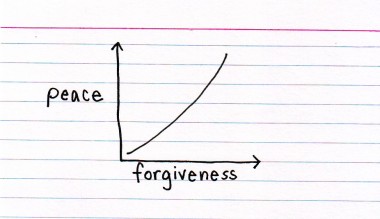
Andy Stanley once asked, “Do you have money in the bank, but no peace in your heart?”
There is no correlation between money and peace.
Zip.
Zero.
Nada.
Get, earn, save, and invest all of it you want… but you’ll never squeeze an ounce of peace out of it.
Subscribe to:
Posts (Atom)